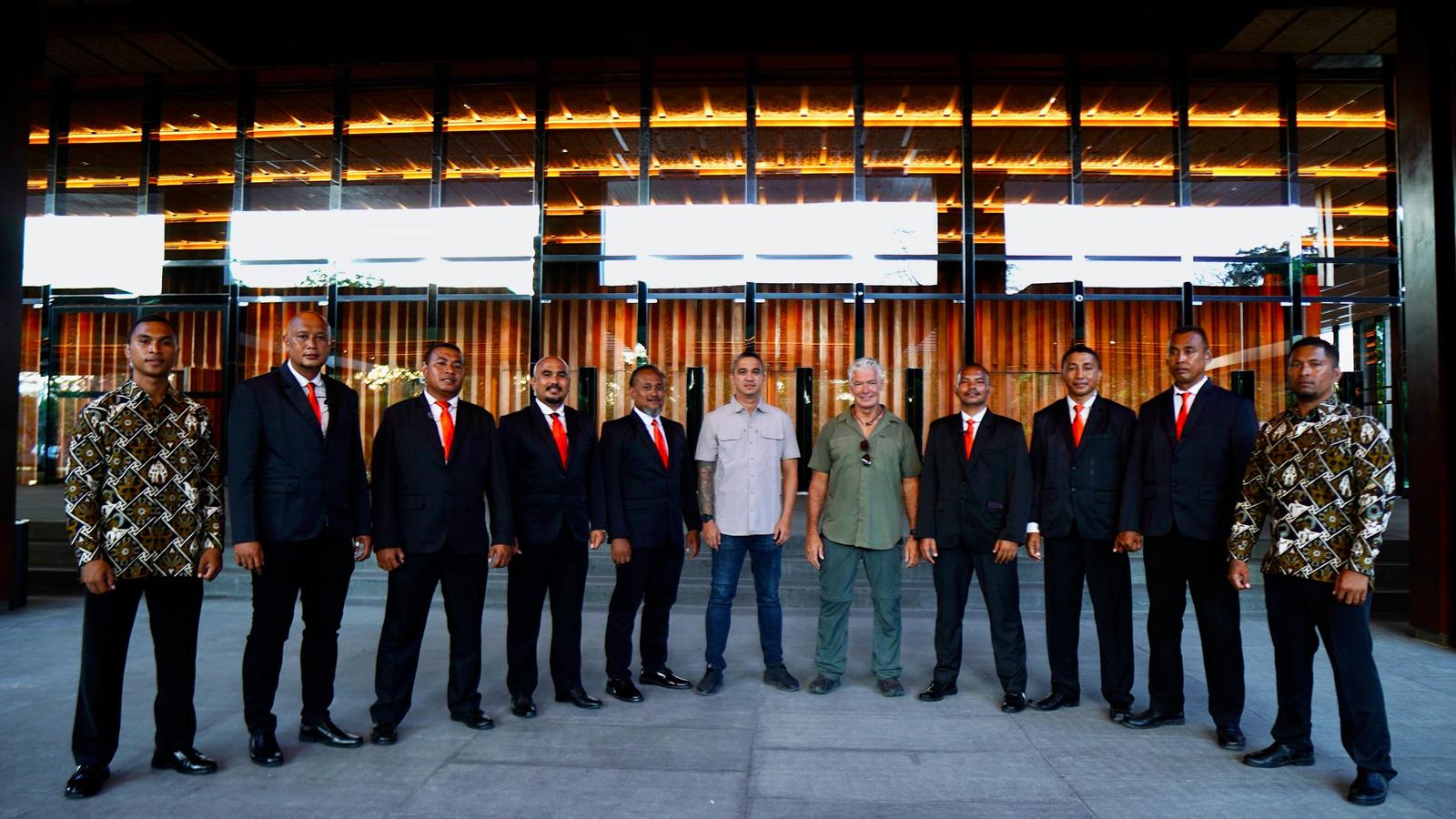
So, you are considering a career in close protection? You want to know how to become a bodyguard. Let’s get one thing straight from the very beginning: this role is not just a tick-box career move.
Being a Close Protection Operative (CPO) is a comprehensive lifestyle choice. Before you even look at training academies, you need to examine your core character. Do you possess natural skills and traits that no training center can give you? We are talking about unwavering integrity, commitment, absolute discretion, and a whole lot of patience.
While specific hard skills like fitness, evasive driving, and threat awareness can be trained—and we will discuss those below—your foundational character cannot be manufactured.

The Evolving Face of Close Protection
I’m Criss Watts, and I have been in the close protection industry for over 30 years, starting my career back in the 1980s. I have seen this industry change dramatically—from the rise of advanced technological threats to the operators themselves. I was operating before the SIA (Security Industry Authority) licensing started in 2001.
While licensing tidied up elements of organized crime within the sector, it also introduced a lack of core skillsets in some areas, while bringing out many prima donnas. Before regulation, you simply didn’t get into this industry without a deep bench of verified skills.
Historically, most Close Protection courses consisted of former military personnel. These learners arrived with a basic natural skillset complemented by their time served in the Army, Navy, or Air Force. However, since 2010, I have trained over 2,000 individuals from the civilian world. I’ve been very impressed with some and, frankly, not so impressed with others.
The biggest issues I see are basic physical fitness, punctuality, and determination. If you want to become a CPO, you must be prepared to graft.
So how do you become the “best of the best”? If you have the natural elements discussed above, here are the 9 simple steps to become and stay a bodyguard.
9 Steps to Becoming a Professional Bodyguard
Step 1: The Honest Self-Assessment (Choosing Yourself)
Look in the mirror and decide objectively: do you have the psychological grit and physical attributes required to become a close protection operative?
Step 2: Funding the Bodyguard Course
There are many funding options available, ranging from military credits to personal funding. When selecting a training provider, ensure they offer transparent financing or perhaps train-to-work programs (where you pay 50% upfront and work off the rest through missions).
Be prepared to invest in your training. A basic, high-quality course will cost between £2,000 and £3,000. Good instructors don’t come cheap. A top training provider has the best instructors, the best academies, and the most up-to-date training equipment. Do not cheap out on your foundation. Remember: you get what you pay for.
Step 3: Finding and Selecting a Training Provider
There are thousands of training providers marketing their courses as the “best in the world.” Ignore the exaggerated promo videos and generic bait.
What should you really look for in a close protection course?
- Verified Reputation: Look for a provider with strong social media reviews and a trustworthy history.
- Instructor Background: Research the operational background of the people teaching you.
- Legitimacy: Ensure they are registered, insured, and assured as a training company.
- Facilities: A serious provider trains from their own academy, not a rented hotel room. They should have training equipment ready and waiting.
A professional Executive Close Protection (EP) course, VIP Bodyguard course, or CPO course must contain the following modules:
- Roles and responsibilities of the CPO
- Threat and risk assessment
- Surveillance and counter-surveillance
- Foot drills
- Vehicle drills
- Operational planning
- Interpersonal skills (etiquette)
- Law and legislation
- Close protection teamwork
- Conflict management
- Reconnaissance (theory and practical)
- Route selection (theory and practical)
- IED search awareness (vehicles and buildings)
- Incidents and dilemmas (practical examples)
- Venue security (varied scenarios)
- Communications
- Kidnap for ransom awareness
- Team Medic certification
- At least two live final exercises
Finally, ensure the course is a substantial length (e.g., 14-28 days). If the training center is residential, that is a major bonus.
Step 4: Bodyguard Licensing (The Legal Requirement)
You have selected your Training Provider (TP) and passed the course. You have earned the award needed to apply for your license.
In the UK, this is the SIA license (Security Industry Authority). Although this is the legal entity for all UK work and UK overseas security work, this SIA license has now become the normal reference for most international contracting companies requesting a security operator. Holding this license proves non-criminality, Level 3 training, and Level 3 Medic awards from recognized bodies. As an employer or HR department, seeing an SIA license means the verification work is half done.
Other regions require their own awards:
- France: CNAPS
- Spain: Titulo de Escolta
- USA: You must gain an award for the specific state and remit to work.
Every country is different. Ensure you book the right TP linked to the specific awarding body license you need. The standard license cost per annum is approximately £220.
Step 5: Securing Work – Employment and Networking
You have the award, you have applied for the license, and you have received it. Now you are a licensed bodyguard (not licensed to kill, just yet).
Now you have to sell yourself. This is the most important skill in the beginning.
- The CV: Refine your CV.
- Cold Calling: Start emailing and calling recruitment companies.
- Networking: This helps greatly. Get involved with organizations like Close Protection World, the British Bodyguard Association, and ASIS. Practice your self-promotion. Watch YouTube seminars on how to influence others to help you land that first job.
Work Locations: Let’s face it: most UK work is based in London. If you live in the North of England or Scotland, you may have to move to the City of London. A CPO job is hard graft—15 hours of full awareness. If you travel more than an hour each way, you won’t survive the tiredness. There is regional work (e.g., protecting Premier League footballers or wealthy business people), but London is the hub.
Step 6: Be Adaptable and Calm Under Pressure
Your job role will change as a bodyguard. One day you may act as a personal assistant; the next, you are a driver. Another day, you may have to defend your client from a violent stalker.
I always train my learners to find humor in adversity. This helps regain control and calms the Principal (your client), making things easier for everyone.
The industry is diverse. You may protect a famous movie star walking to and from film sets. You may watch over a female client to protect her from long-term stalking and abuse. You must react to different needs and environments instantly.
Step 7: Personal Time and Sleep Management
How does one find time for themselves? After protecting the client on the ground for 12 hours, you still need time to prepare tomorrow’s operational plans (route planning, bookings). Then you must maintain your physical fitness.
Phew! Welcome to five hours of sleep. This is the biggest problem in our industry. Sleep management is critical. Imagine how one night’s sleep disturbance can have a roll-on effect on your performance and your safety. Guard your sleep time fiercely.
Step 8: Check Your Ego and Avoid Narcissism
Egoistical blabber about being the “best in the world” will only hurt you. As in most industries, there will always be someone better than you. Fighting this is pure ego.
After 10 years in the industry, you may think you are the best; this is where you will lose your path to being a professional and slowly get pushed out.
Your reputation is everything. There will be narcissists out there determined to ruin your reputation. Identifying these negative types is a job in itself. On the outside, they seem like the nicest humans, but internally they will plan your demise, sacrificing their own career just to damage yours. Maintain your positivity and professionalism.
Step 9: Commitment to Lifelong Learning (CPD)
CPD (Career Professional Development) is the holistic commitment of professionals towards the enhancement of personal skills and proficiency throughout their careers.
Your original training provider may have other advanced courses to explore once you get your feet on the ground and start working. This could include specialized surveillance training or firearms training (for hostile environments), progressing from Level 1 to Level 2.
Whatever your choices and direction, try to enjoy this global working environment. It can take you to a professional executive level that requires skills more diverse than James Bond’s. This career is about longevity, reputation, and positivity.
I personally wish you the very best if you are looking to work in the industry that has fed me for 35 years. For me, it is a life choice. Knowledge is the tools of a great CPO.
Good luck (Labour Under Correct Knowledge).