Level 6 RQF 40-Day Unequalled Security Training Programme
Integrated Professional Protection & Tactical Qualification Pathway
WHO IS THIS COURSE FOR?
Consolidated Training in One Pipeline
Most people entering the industry piece together qualifications:
- Close Protection Level 3
- First Aid Level 3
- Conflict Management Level 2
- Surveillance Awareness Level 2
- Firearms Proficiency Level 3
- Hostile Environment Level 4
A long-form program bundles these into a single pathway, often aligned with frameworks like the Regulated Qualifications Framework (RQF). This carries real value and helps you stand out in a highly competitive industry. Owning a recognised diploma is the standard you should aim for.
Why that matters:
- Saves time coordinating multiple courses
- Ensures consistency in how skills are taught
- Builds connections between disciplines (not just isolated knowledge)
Instead of fragmented learning, you gain a structured and coherent skill set.

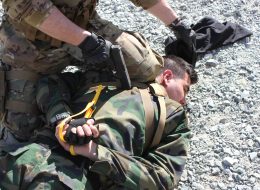
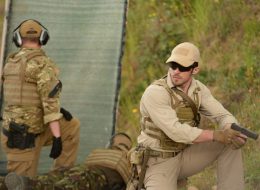

COURSE INFORMATION
The UCP 40-Day Unequalled Security Training Programme is an intensive, immersive training pathway designed to develop highly capable security and close protection professionals.
This programme integrates academic qualifications, operational training, medical capability, tactical movement, and close-quarter battle skills, delivered across multiple RQF-accredited levels, providing graduates with a comprehensive and industry-leading qualification portfolio.
The course is structured to prepare individuals for deployment within private security, executive protection, hostile environment operations, and specialist protective roles.x
The 40-day programme combines the following regulated and specialist qualifications:
- First Responder Emergency Care (UCP Level 3 FREC)
- Working as a Close Protection Operative (RQF Level 3 – SIA Applicable) – Excluding Thailand
- Close Protection in Hostile Environments – Firearms & Tactics (RQF Level 4)
- Close Quarter Battle (CQB) Diploma (RQF Level 6)
Training is delivered progressively, ensuring foundational competence before advancing to complex tactical and decision-making environments.
Important Note:
SIA Application Support is available exclusively through the UCP UK Academy. It is not available at the Thailand Academy or any other UCP Academy location.
Core Course Objectives
The programme is designed to:
- Develop competent, disciplined, and professional close protection operatives
- Provide recognised RQF-accredited qualifications aligned with industry standards
- Build confidence operating in high-threat and hostile environments
- Deliver advanced CQB capability within a structured academic framework
- Ensure medical, legal, and operational readiness
Training Environment & Delivery
- Delivered by experienced professional British and American instructors.
- Conducted in purpose-built training facilities in the UK and Thailand
- Combination of classroom instruction, practical drills, and scenario-based training
- Continuous assessment to ensure safety, competence, and progression
Programme Outcomes
Upon successful completion of the UCP 40-Day Unequalled Security Training Programme, learners will:
- Hold multiple recognised RQF qualifications
- Meet SIA licensing requirements (subject to eligibility) – Excluding Thailand
- Demonstrate advanced medical, tactical, and protective capability
- Be prepared for professional deployment within the security and close protection sector
- Have completed one of the most comprehensive integrated security training programmes available
The UCP 40-Day Unequalled Security Training Programme represents a complete professional development pathway, combining medical, protective, tactical, and CQB excellence into a single, structured course.
This programme is designed for individuals who demand the highest standards, recognised qualifications, and operational credibility.
Depth Through Time and Repetition
Forty days allows something shorter courses can’t: iteration.
You don’t just learn a concept once—you:
- Practice it
- Get corrected
- Repeat it under pressure
Practical impact:
- Movements become more natural
- Decision-making becomes faster
- Confidence becomes more realistic (not overestimated)
This is where many short courses fall short—they teach what to do, but not how it holds up under stress.
Exposure to Multi-Environment Scenarios
A longer course can simulate:
- Urban protection work (low and medium risk)
- Travel and movement planning
- Surveillance and counter-surveillance
- Emergency and evacuation scenarios
- High-risk environments
- Weapons and CQB training
Close protection is rarely one-dimensional. Training across multiple environments reduces “first-time shock” in real operations.
Professional Conditioning
Beyond tactics, extended programs develop:
- Communication style
- Situational awareness
- Discipline and reliability
- Personal presentation
These factors often determine hiring decisions. Technical skill alone isn’t enough—professional conduct is critical.
Structured Assessment at a Higher Qualification Level
A Level 6 diploma under the Regulated Qualifications Framework (RQF) indicates:
- Structured evaluation throughout the course
- Academic and practical assessments
- Demonstrated understanding, not just attendance
Benefits include:
- Enhanced credibility
- Stronger CV differentiation
Network and Alumni Value
An active alumni network can often be as valuable as the training itself. It can provide:
- Job opportunities and leads
- Industry introductions
- Peer support
- Informal mentoring
Close protection is a relationship-driven industry. Strong networks can accelerate career progression and help avoid poor opportunities.
Psychological Readiness
Spending 40 days in a focused training environment:
- Exposes you to pressure
- Tests consistency
- Develops teamwork
Outcome:
- Clear understanding of strengths and weaknesses
- Realistic expectations of the role
- Better preparation for operational demands
Who Benefits Most From This Type of Course
Ideal for:
- New entrants seeking a structured, all-in-one pathway
- Career changers (military, law enforcement, civilians)
- Individuals who prefer guided development over fragmented learning
Less suitable for:
- Experienced operators seeking niche specialization
- Those expecting immediate high-level contracts without groundwork
Bottom Line
A 40-day program can be a strong launch platform by combining:
- Structured learning
- Repetition and realism
- Recognised qualifications
- Networking opportunities
The real return on investment depends on how you use the training—your performance, relationships, and professionalism.
The course can open doors, but you must prove you belong.
Course Cost
£8150 + VAT
Location
London/Kent (United Kingdom) and Bangkok (Thailand)
Course Dates
1st of Every month
Course Length
40 Days
Skill Prerequisites
- Online Weapons Safety Award
- Good Understanding Of The English Language
COURSE CONTENTS
Module 1: First Responder Emergency Care
RQF Level 3
This module develops advanced pre-hospital emergency care skills relevant to security and close protection environments.
Key Topics Include:
- Roles and responsibilities of the First Responder
- Scene safety and dynamic risk assessment
- Patient assessment and primary survey
- Airway management and oxygen therapy
- Management of catastrophic haemorrhage
- Shock recognition and treatment
- Medical and trauma emergencies
- Fractures, spinal injuries, and immobilisation
- Casualty evacuation considerations
- Legal, ethical, and documentation requirements
Outcome:
Learners achieve RQF Level 3 certification, enabling competent medical response in operational environments.
Module 2: Working as a Close Protection Operative
RQF Level 3 (SIA Applicable)
This module meets the Security Industry Authority (SIA) requirements for licensing as a Close Protection Operative (CPO).
Key Topics Include:
- Principles of close protection operations
- Threat and risk assessment
- Route planning and reconnaissance
- Advance work and operational planning
- Residential and static security
- Protective formations and movement
- Vehicle-based protection and drills
- Conflict management and communication
- Legal powers, limitations, and use of force
- Professional standards and ethics
Outcome:
Successful completion enables learners to apply for the SIA Close Protection Licence, subject to eligibility.
Module 3: Close Protection in Hostile Environments
Firearms & Tactics – RQF Level 4
This advanced module prepares learners to operate in elevated-threat and hostile environments, focusing on tactical awareness and firearms-based principles (training context only).
Key Topics Include:
- Hostile environment threat analysis
- Tactical movement and positioning
- Principles of firearms safety and handling
- Weapon awareness and employment theory
- Contact drills and reactions to threat
- Tactical communications and command
- Team-based movement and coordination
- Vehicle tactics in hostile environments
- Decision-making under pressure
- Legal and ethical considerations
Outcome:
Learners achieve RQF Level 4 certification, demonstrating advanced understanding of hostile environment operations and tactical principles.
Module 4: Close Quarter Battle (CQB) Diploma
RQF Level 6
This is the highest CQB qualification available within the industry, combining academic rigour with advanced practical application.
Key Topics Include:
- CQB doctrine and operational principles
- Structure clearing methodologies
- Individual and team movement techniques
- Use of angles, cover, and concealment
- Room, corridor, and stairwell procedures
- Decision-making in confined environments
- Command, control, and communication
- Risk management and legal considerations
- Operational planning for CQB environments
- Post-operation assessment and reporting
Outcome:
Graduates are awarded the CQB RQF Level 6 Diploma, demonstrating advanced competence, leadership, and decision-making capability in close-quarter environments.
Talk to a Course Expert
Fill out the form below to connect with our expert instructor. We’re here to help you with course details, enrollment, and any other inquiries. Start your learning journey today!